Long before the boardrooms and the venture capital, I was a photographer. Fashion and art, which meant spending years reading a room before ever lifting the camera. Learning to see light as emotion. Learning that the difference between a good shot and a great one lives entirely in the human moment you choose to freeze.
That training never left me. It just changed medium.
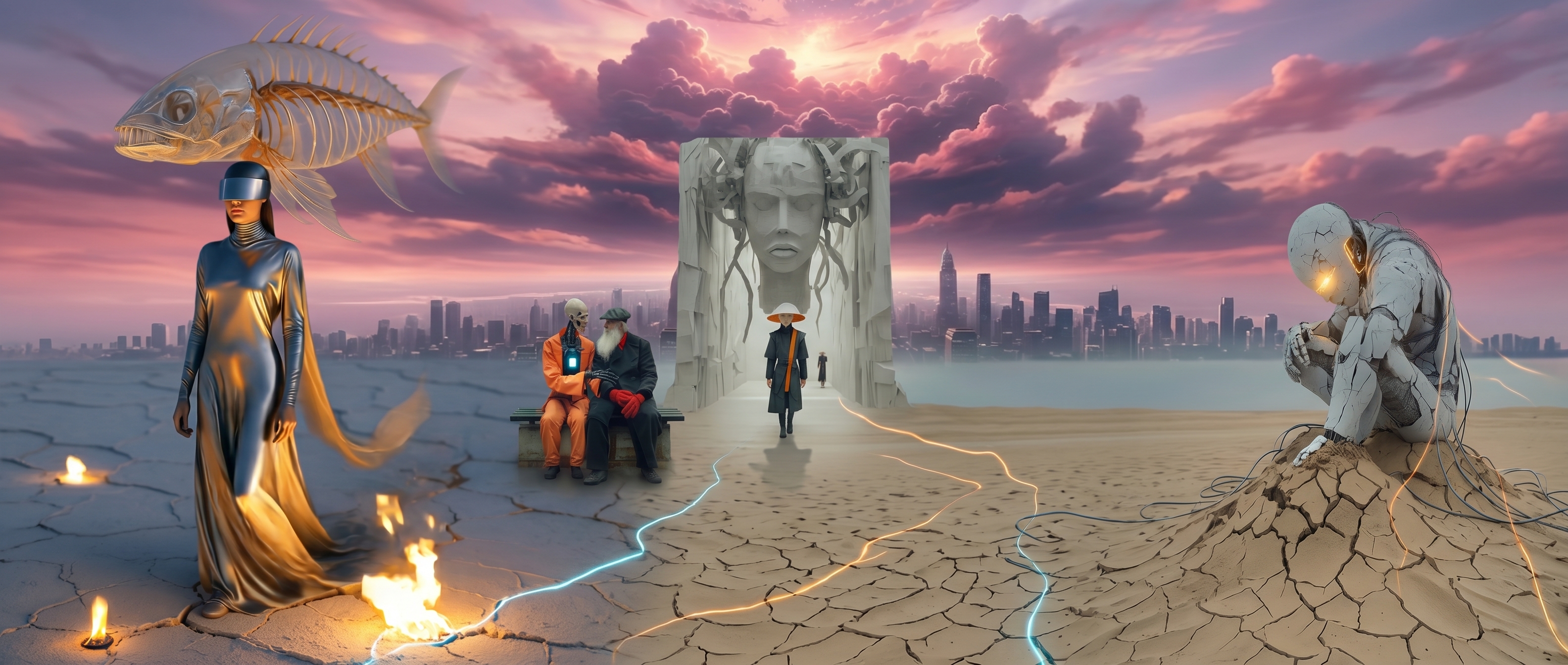
Today, under the name Keilo, I create generative AI art. What draws me to it isn't novelty. It's the conversation. When you prompt an AI image model you're not commanding a machine; you're working with something that has absorbed centuries of human visual culture, emotion, fashion, and form, and asking it to reflect that back through your intent. That's not artificial creativity. That's a mirror held up to everything humans have ever made and felt.
Understanding where that mirror gets things right, and where the humanity drops out, is exactly what makes me sharper at building AI that works for real people. The eye you train on a fashion shoot and the eye you bring to an AI transformation programme are, at root, the same eye: looking for the human truth inside the technical frame.